
My Eco-Loop
Mobile Case Study, Sept 2023
A mobile app that helps motivate users to achieve their sustainability goals through positive UX writing, personalization and gamification.

Overview
The Problem
The global climate crisis continues to pose a threat to the future of humanity, with the United States being one of the top contributors to the problem. Although people recognize there is a problem, and seemingly want to help, it is difficult to motivate change as they feel the problem is too far gone, and that they alone cannot make an impact. How can we help motivate people to act more sustainably in their everyday life?
Skills
Tools
The Solution
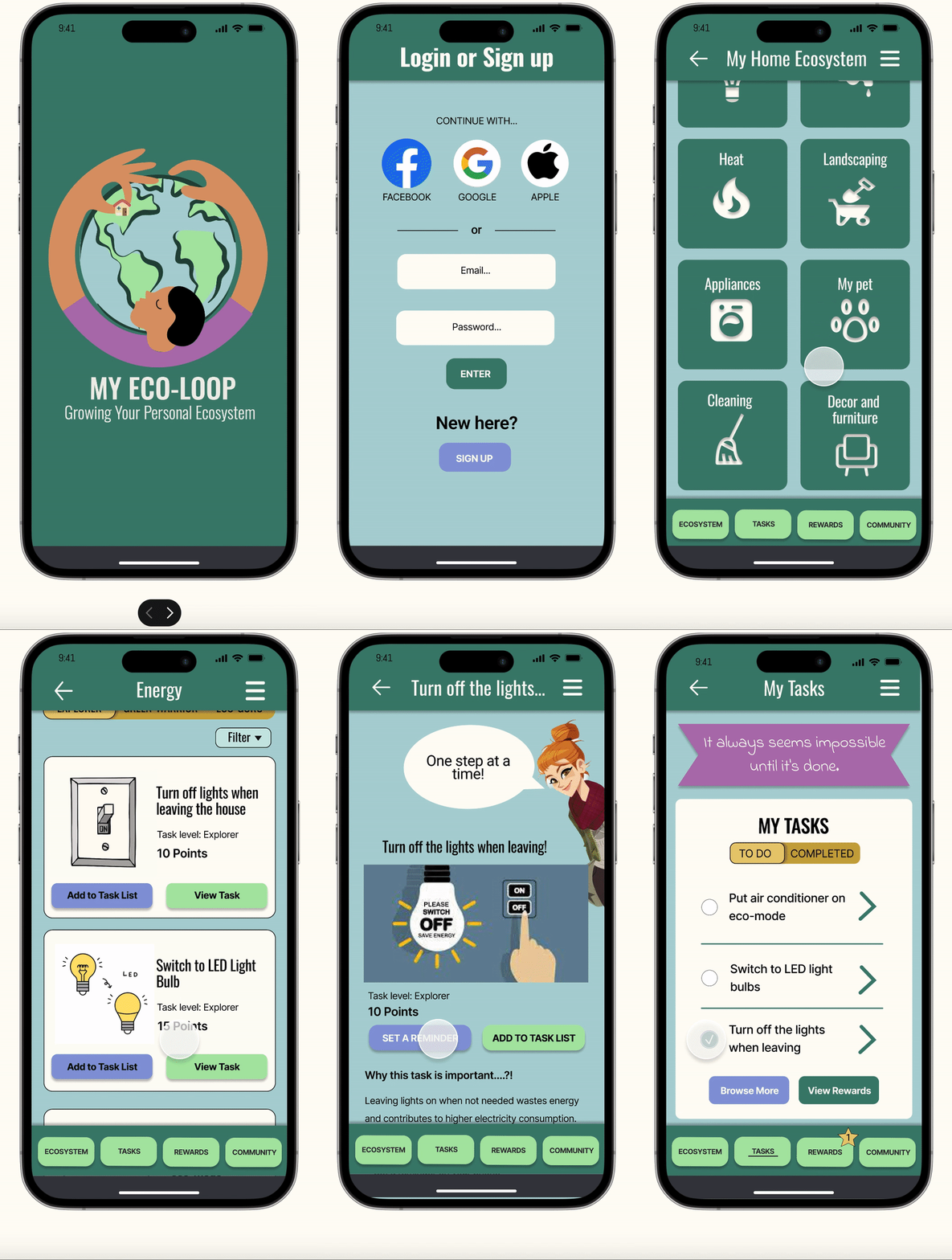
An app that make sustainability fun and approachable through positive UX writing and gamification. Shifting the problem from the whole world to the individual.
Product Overview
Key Features
-
Create a customizable avatar to live in your personalized ecosystem
-
Motivational UX writing embedded through out app
-
Browse tasks at all levels to find new ways to be more sustainable
-
Filter tasks by costs, points, and personal habits
-
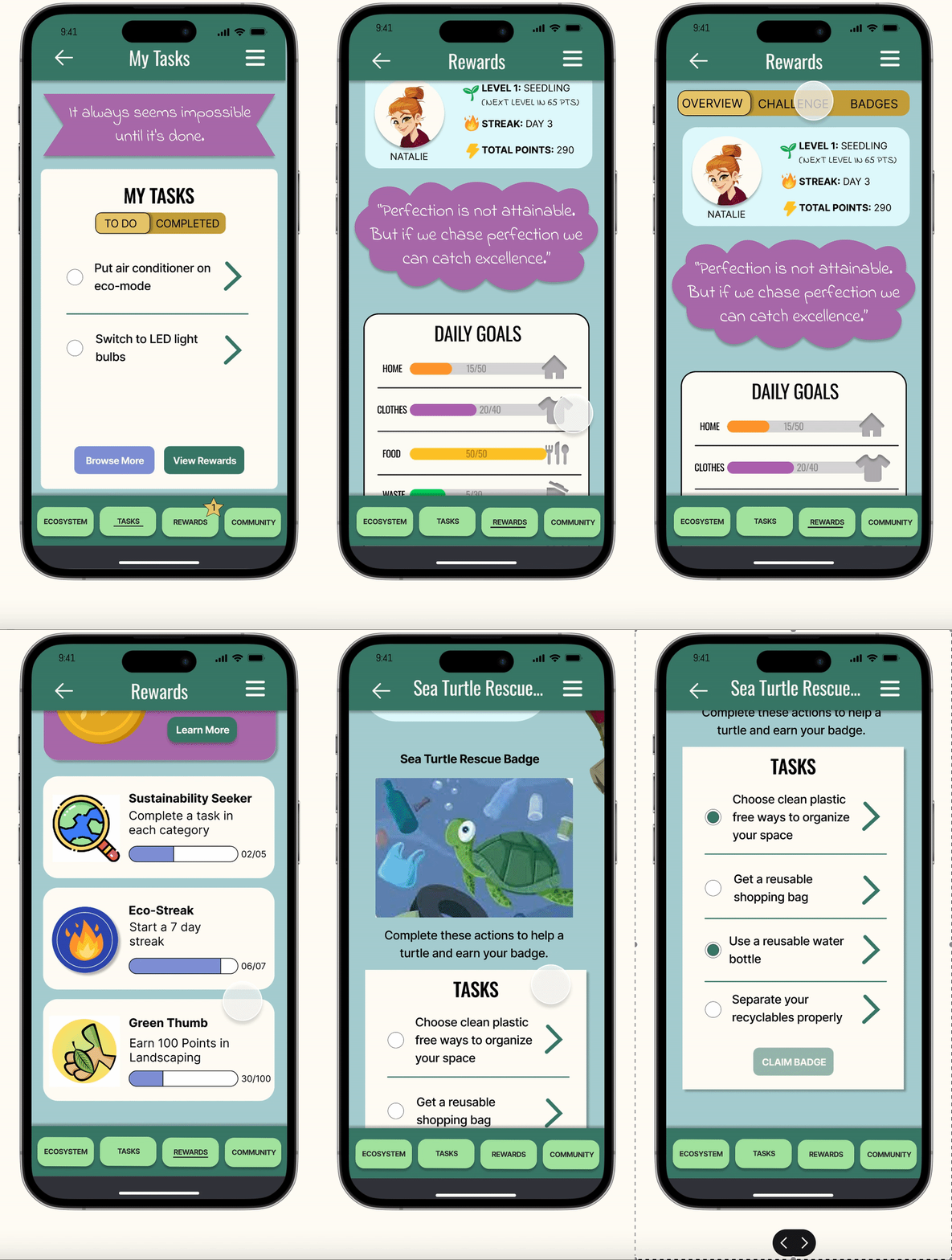
Fill your daily goals to start streaks and earn badges
-
Get real life rewards for completing challenges
-
Set reminders to help you complete tasks
-
Connect with people in your area with similar goals to learn from and share tips
Research & Empathy
Choosing a topic
We were challenged with the task of developing an app to solve for a local or global problem. As a group we knew we wanted to do something on the topic of sustainability, as it was something we all individually felt passionate about and is an important topic globally. However, with sustainability being such a broad category with a wide potential user base, we were challenged to keep a focused scope. We initially chose not to narrow our scope but to let our initial research guide us to a more concrete problem.
Assumptions
My main assumption was that anyone who would use our app already had a desire to be more sustainable or continue to live sustainably. I did not want to focus on converting people to be more sustainable. Based on this I placed our proto persona in the 25-40 age range, as I felt people in this age group typically believe in the climate crisis and are more willing to take action. Based on my own internal biases I assumed that some barriers to sustainability would be budget and the general knowledge around how to be more sustainable. This lead me to believe that my target user would be someone in a mid-low income household, who is just doing the little things they can to be more sustainable.
Proto Persona

User Research Plan
I decided that because my team was limited on time and there is already a lot of quantitative data available on the topic of sustainability, I would focus our research efforts on user interviews, instead of a survey. Through our user interviews our goal was to gain insight into users' personal experiences and beliefs on sustainability.
Objectives
1. Learn about people's current attitudes towards sustainability
I wanted to understand people's current attitudes towards sustainability so I would have a baseline to move forward from. When discusses with team members we discovered that we all personally had different views on what being sustainable meant to us, and we assumed that many of our users would also have different understandings of this. I asked questions like: “What is your current relationship with sustainability?”, “What does "living sustainable" look like to you?”, and “Tell me about the last time you heard about someone talking about sustainability. What was your reaction?”
2. Understand user's pain points on living a more sustainable lifestyle/Understand why people may not live as sustainably as they would like
After I had our baseline of what sustainability meant to the user, my next focus was to figure out what is stopping them from achieving their sustainable goals. I thought if we could figure out why people weren't meeting their goals I could come up with more targeted solutions to help them do so.
3.Understand how people make decisions on sustainability
Finally I wanted to discover what currently motivates people to make more sustainable decisions, to see if there was anything that was currently working for the user that I could expand upon.
Key Learnings from Interviews
Empathy Map

Through my interviews I discovered that money was not the greatest barrier to living sustainability, as I had expected. A lot of people did say that money played a role in making sustainable decisions and purchases, however, the key barrier they were facing was an emotional one. All of our interviewees expressed that even though they recognize that sustainability is important and that they want to do better for the future, they felt it was a hopeless cause and just too big of a problem for them to solve, so why even bother?
After conducting interviews I created an empathy map and user pesona to help consolidate our learnings into one key user for our app. Since emotions played such a big role in our interviews I wanted to understand the differences on what our user “Says/Does” versus what they “Think/Feel.”
Overall, I found that the user felt overwhelmed by how big and existential the problem was, and that they alone could not solve it. As a team we discussed the issues of accountability and how people expressed that they often look to others to guide them on what they should be doing - if they felt others were not pulling their weight, they could slack off as well. A lot of people felt guilty for not doing enough to be more sustainable. Even though a lot of users feared the problem was too far gone, all were still hopeful that someday, someone would find a solution.
Define & Ideate
In order to form a problem statement I first created smaller user insight statements including themes from the research, shorter impact statements and “how might we” statements. As a team we looked at our ideas and voted on what felt should be prioritized in our problem statement. Discussing our ideas together also allowed us to come up with new ideas and bounce off of each other.
Since the problem we were facing was so vast I wanted to separate our problem statement into three parts: User Mentality, Global Impact and Potential Solution.
I knew that I wanted to have the main focus of our project be on changing the user mentality when it comes to being more sustainable. I felt that if we could shift the way people think about sustainability we could help motivate people to take more sustainable actions.

Defining a Problem Statement
01
User Mentality
Many people have a conflicting internal dialogue when it comes to pursuing a more sustainable lifestyle
They often feel guilty for not doing enough, but if the goal is to be perfect, why even bother, "It's impossible!"
02
Global Impact
The increasing demand of finite resources and the growing environmental impact of human activities have led to the pressing need for effective solutions to ensure long term sustainability.
By making a change to the individual persons mindset, we are looking to find a solution to the challenge of creating a more sustainable future for current and upcoming generations
03
How Might We
"How might we adjust the "all or nothing" mentality around sustainability, to focusing on taking smaller steps and self-reward, instead of resting the fate of humanity on our shoulders?
Ideate
In our initial brainstorm we used the “I like, I wish, I wonder” method to get out any ideas we had for possible solutions to our problem statement.
I felt that our user would like to be reminded of their goals to help motivate them, and that they like the feeling of accomplishment when they do something they feel is sustainable. To do this, I wanted to have positive UX writing embedded throughout the app.

I found that since this was such a daunting problem, users would find it easier if it was broken up into smaller tasks. In our interviews each user thought of a different part of their life when it came sustainability, so I wanted to make sure each category of life could be represented. I came up with the categories of Home, Food, Clothes, Waste and Transportation. Each category would also have subcategories to further break down the problem.
I also found that it would be very important to shift the focus from the fate of the world and what others are doing, to self reward and feeling good about what users personally are doing. We discussed the idea of having a personal ecosystem for each user and having a customizable avatar so the user could see themselves physically placed in their personal ecosystem.
I wanted to see if I could gamify sustainability to make it seem more lighthearted and enjoyable, while encouraging more and more growth. I decided on having a rewards system and having multiple ways to earn rewards so each user could find something that was gratifying.
Journey Map

User Flow

Wireframes

Homepage
-
The home page represents the users own personal ecosystem. This allowed the user to better relate the problem to themselves and focus less on others
-
The ecosystem is separated into smaller sub categories to help focus the user and break the big problem into manageable parts
-
The banner at the top of the screen will change everyday to a new motivational quote. This is an opportunity for further personalization by curating the quote to be targeted to the users set goals.

Task Flow
-
Once you enter the "Home Ecosystem" tasks are separated further into subcategories.
-
Includes motivational quote related to the specific part of the ecosystem or sub category the user focused on
-
Each sub category is represented by a name and large icon for ease
-
Tasks are filtered by the level and by the number of point the user can earn by completing
-
The user has the option to save a task for later so they can continue browsing
Rewards
Throughout the design process I found the rewards system to be the most difficult to create. I knew I wanted there to be multiple ways to earn rewards to reach users with different habits/routines. I also knew there needed to be an interaction that was delightful to the users so they would feel a sense of accomplishment when they completed a task. At first I played with the above idea of having the user fill a plant with water. The UI would start as a greyed out plant and gain color as the user earned more points. This idea was tested and found to be too confusing for the user. See below for testing and the iterated design!

User Testing
Task 1:
Explore your Home Ecosystem and complete a task. Does the flow make sense?
Task 2:
Browse your rewards and explain your understanding. Do users understand the rewards and find them enjoyable?
Before

After


Key Findings:
-
Overall users were able to complete the first task and found the flow to be intuitive
-
Although users liked the gamification and found it motivating to complete the tasks, users struggled to understand the rewards, how to claim them and what the various types of rewards meant
Before

After


Iterations:
-
Updated the Rewards page to simple and clear, modeling the daily rewards after the Apple Fitness app
-
Added the ability to set your own goals for further personalization
-
Added additional positive writing
-
Added a modal to explaining the weekly challenge
-
Added overview to the top of the challenge page for further clarity
UI Design
I kept the UI for the app lighthearted and playful. I wanted to make sure that the color story, typography and imagery looked fresh and different from the typical sustainability app.
Style Tile

Key Points:
-
Clear Logo & Branding to represent sustainable brand focused on a personalized ecosystem
-
Colors are earthy but vibrant to signify modern sustainability
-
Positive and playful vibes to keep app approachable and enticing
Hi-Fi Prototype
Homepage
-
Day & Night modes in a playful interactive background
-
Read motivational quotes for inspiration
-
View daily progress in a clear way
* In future iterations I plan to add animations and micro-interactions to enhance delight


Tasks
-
Navigate sub categories and select tasks at your comfort level
-
Filter by cost, points, and routine
-
Learn about how even the smallest task can make a difference
-
Get tips and tricks on how to complete task


Set a Reminder
-
Give yourself a gentle yet motivational reminder to complete tasks
-
Add tasked to your virtual list to check off when completed
-
View previously completed tasks


Rewards
Daily Overview
-
Earn points to fill your bars
-
Set goals and see suggested goals based on your current activity
-
View your weekly stats and see your impact
Weekly Challenge
-
Each week we partner with an organization that offer real life rewards
-
Complete the weekly challenges to earn discounts and store credit
Badges
-
Collect badges through mini challlenges
-
Earn limited addition badges by completing tasks particular to a cause


